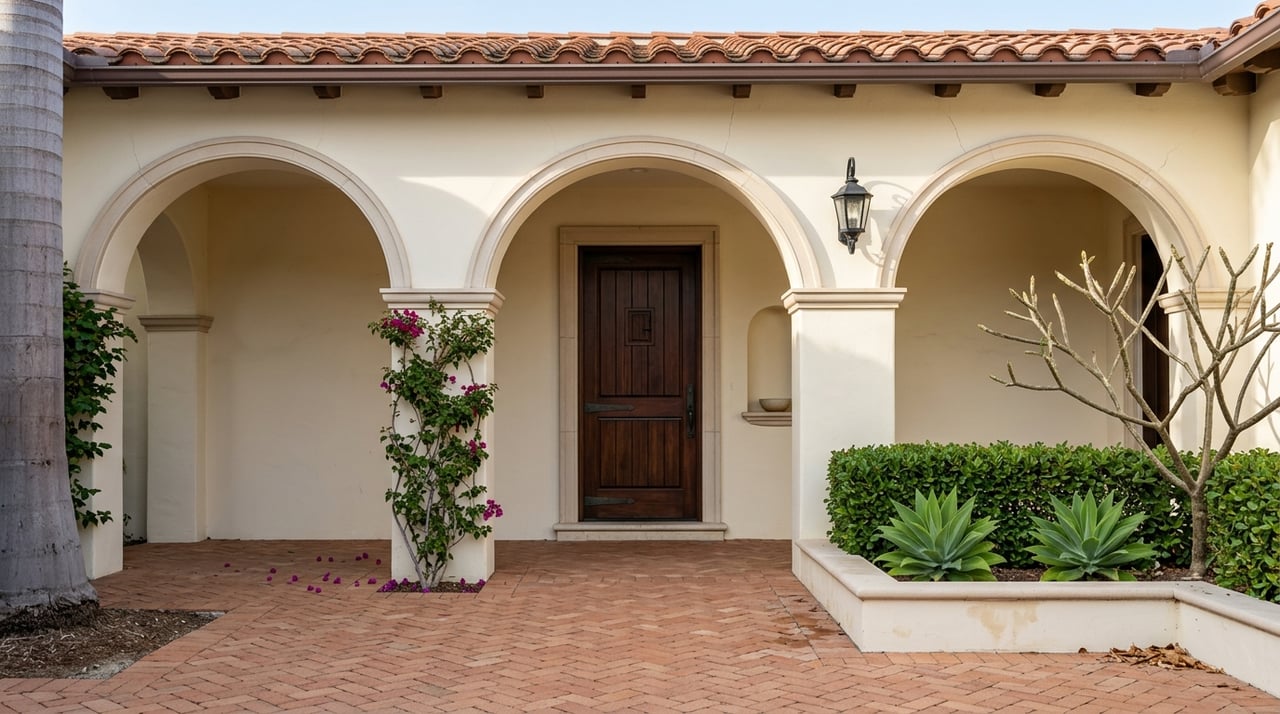
Dreaming about a Coral Gables home with stucco walls, barrel tile roofs, and a courtyard that feels like a private retreat? You are not alone. Mediterranean-style homes are a big part of what makes Coral Gables so distinctive, but buying one takes more than falling in love with the look. If you want to understand what defines these homes, how they typically live, and what to watch for before you buy, this primer will help you shop with more confidence. Let’s dive in.
Why Mediterranean style matters in Coral Gables
In Coral Gables, Mediterranean Revival is more than a design trend. It is part of the city’s identity. According to the Advisory Council on Historic Preservation, Coral Gables was developed as a planned City Beautiful community centered on Spanish and Mediterranean Revival architecture, and the city still retains much of its original character.
That architectural legacy is easy to see across the city. Landmark buildings like the Biltmore Hotel, City Hall, Douglas Entrance, Venetian Pool, and Coco Plum Woman's Club help explain why the Mediterranean look remains so closely tied to Coral Gables living.
The style also connects to Florida history more broadly. The National Register documentation for Coral Gables notes that Mediterranean Revival became strongly associated with the Florida Land Boom of the 1920s, and Coral Gables remains one of the clearest local examples of that era.
Key features to look for
If you are touring Mediterranean-style homes in Coral Gables, certain features tend to come up again and again. These are not random decorative choices. They are part of a design vocabulary that gives the homes their character.
Common exterior features include:
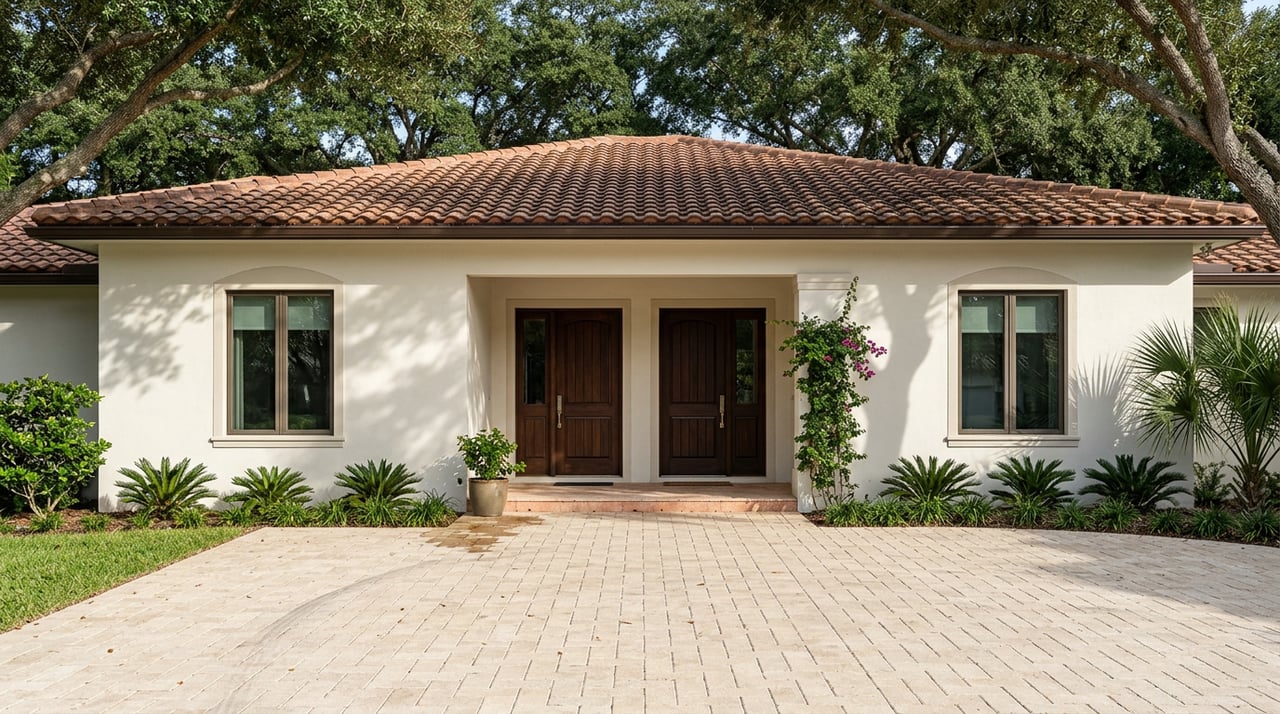
- Stucco walls
- Red clay or barrel tile roofs
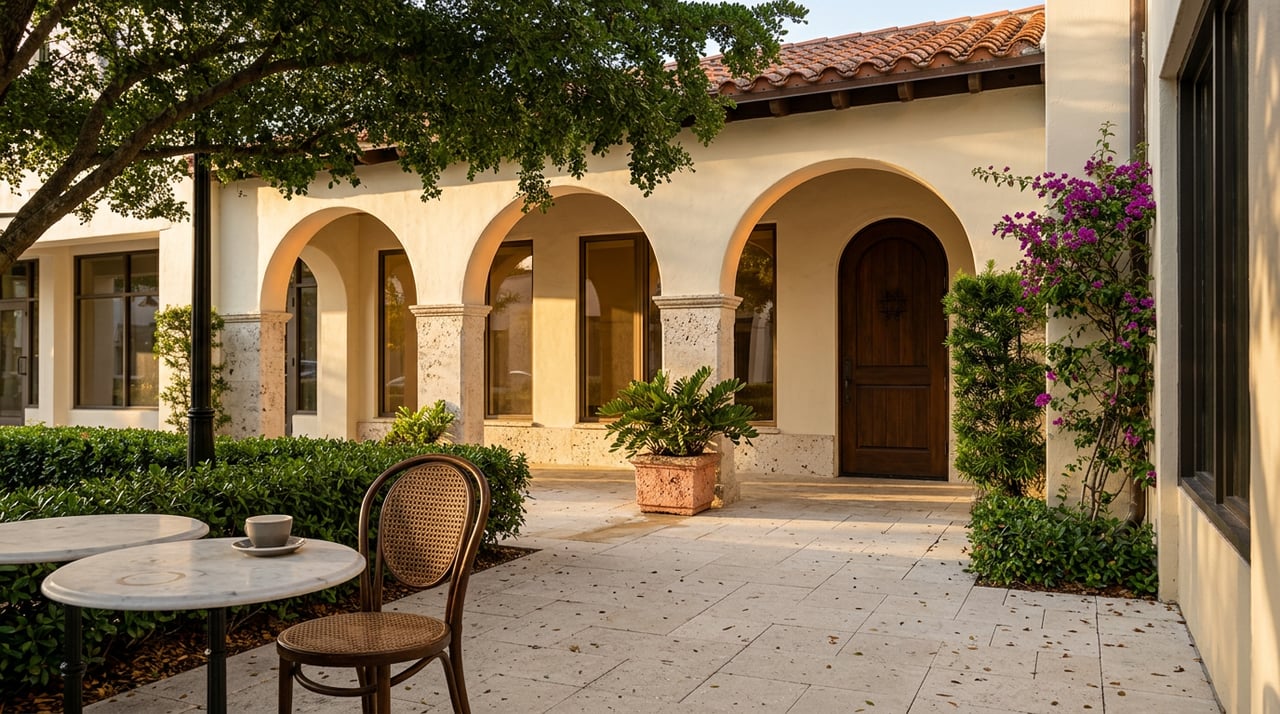
- Arches and arcades
- Loggias
- Courtyards
- Wrought iron details
- Decorative tile
- Tower elements
- Decorative window and door surrounds
The National Park Service documentation also describes low-pitched or flat parapeted roofs, terra cotta details, and U-shaped or L-shaped plans that often help frame an outdoor courtyard.
Coral Gables adds its own local texture to the style. The city’s landmark resources point to materials and details like native oolitic limestone, coral rock, exposed rafter tails, and carefully proportioned openings that reinforce the area’s historic look.
How these homes usually live
One of the biggest surprises for buyers is how different a period Mediterranean home can feel from a newer South Florida house. You may not get the fully open layout that many recent builds emphasize. Instead, you will often see a more intentional flow between indoor and outdoor spaces.
In preservation materials and landmark examples, the courtyard and loggia stand out as defining features. The Coco Plum Woman's Club landmark record describes the interior courtyard as the quintessential element of Mediterranean Revival architecture.
For daily living, that often means:
- More defined living and dining spaces
- A central hall or foyer
- Strong separation between public and private rooms
- Covered outdoor areas that function as extensions of the home
- A layout that feels more layered than a modern open plan
For many buyers, that is part of the charm. These homes can feel elegant, intimate, and highly connected to the outdoors. If you entertain often or value architectural character, that layout may be a major plus.
Original details that add value
When buyers picture a Mediterranean-style home in Coral Gables, they are often responding to original details as much as the exterior silhouette. Those details can create warmth and authenticity that are hard to replicate.
The city’s preservation guide highlights interior elements worth retaining when possible, including moldings, original flooring, fireplaces, niches, open beamed ceilings, window treatments, and staircase details. These are the kinds of features that can make an older home feel special rather than dated.
Windows matter, too. The preservation guidance notes that original windows are critical to a period home’s character, and changing window proportions or enclosing a loggia can significantly alter how the house reads. If architectural integrity matters to you, this is something to pay attention to during showings and inspections.
Ask whether the home is historic
Before you buy, find out whether the property is a local landmark or located within a historic district. That one answer can shape what you are allowed to change later.
According to the city’s preservation guide, a Certificate of Appropriateness is required before most exterior work on designated properties and before a building permit is issued. Coral Gables also uses the Secretary of the Interior’s Standards for Rehabilitation in its review process.
That does not mean updates are impossible. It does mean the city will look closely at compatibility in areas such as:
- Color
- Materials
- Window and door patterns
- Proportion
- Overall architectural order
If you already know you want to expand a kitchen, add living space, alter windows, or rework outdoor structures, this step is essential.
Renovation plans need a reality check
A Mediterranean-style home can absolutely be updated for modern living. The key is understanding where you have flexibility and where character-defining features may limit your options.
The city guide explains that additions and alterations should respect the home’s scale, massing, roof pitch, materials, and window placement. For a buyer, that means your renovation budget should include both design and approval considerations, especially if the property has historic significance.
Before you commit, it helps to ask practical questions such as:
- How much of the original architecture remains intact?
- Have previous owners already made major exterior changes?
- Are there enclosed loggias, altered windows, or additions that affect the original style?
- Will your planned updates require city review?
These questions can help you separate a simple cosmetic project from a more complex preservation-sensitive renovation.
Climate and maintenance matter
In Coral Gables, architectural beauty and climate readiness need to go hand in hand. South Florida’s subtropical marine climate brings a long warm summer, abundant rainfall, and a mild dry winter. According to NOAA’s Coast Pilot, hurricane season runs from June 1 through November 30, with tropical cyclone activity most likely in August, September, and October.
For buyers, that makes maintenance especially important in older Mediterranean-style homes. Pay close attention to:
- Roof condition, especially tile roofing
- Stucco condition and signs of moisture intrusion
- Site drainage
- Window condition
- General storm preparedness
Flood risk should also be part of your due diligence. Miami-Dade directs buyers to FEMA flood maps for current flood-risk information, so it is smart to review that early when narrowing your options.
What authenticity looks like
Not every home described as Mediterranean in a listing offers the same level of authenticity. Some homes preserve original forms, materials, and details. Others borrow the look more loosely.
Coral Gables has a particularly strong architectural framework because of its preservation history and concentration of period homes. The city’s Mediterranean Design resources reinforce that there is a specific local design language, not just a broad style label.
If authenticity matters to you, look beyond the headline description. Ask whether the house still reflects the proportions, materials, and defining features that make Coral Gables Mediterranean architecture so enduring.
A smart buyer checklist
As you tour Mediterranean-style homes in Coral Gables, keep this quick checklist in mind:
- Confirm whether the property is landmarked or in a historic district
- Evaluate the condition of the roof, stucco, windows, and drainage
- Identify original features worth preserving
- Ask what exterior changes may require city approval
- Review flood-risk information and storm-readiness considerations
- Compare the home’s layout with how you actually live
The right home is not just the one with the prettiest arches. It is the one that fits your lifestyle, your update plans, and your comfort level with ongoing maintenance.
If you are considering a Mediterranean-style home in Coral Gables, working with a local advisor can help you evaluate both the romance and the reality. Green Group Realty offers neighborhood-level guidance to help you navigate Coral Gables homes with clarity, whether you are focused on architectural character, renovation potential, or long-term value.
FAQs
What defines a Mediterranean-style home in Coral Gables?
- In Coral Gables, Mediterranean-style homes commonly feature stucco walls, barrel tile roofs, arches, loggias, courtyards, wrought iron details, and locally significant materials or proportions tied to the city’s historic architectural character.
Do Coral Gables Mediterranean homes usually have open floor plans?
- Many period Mediterranean homes in Coral Gables have more defined rooms, central halls, and stronger separation between public and private spaces than newer homes, with a strong emphasis on indoor-outdoor flow.
Do historic Coral Gables homes have renovation restrictions?
- If a home is a local landmark or located in a historic district, many exterior changes may require a Certificate of Appropriateness and review for compatibility with the home’s architectural character.
What should buyers inspect first in a Coral Gables Mediterranean home?
- Buyers should closely review roof condition, stucco upkeep, windows, drainage, and flood-risk considerations, especially because South Florida’s climate brings heavy rain, humidity, and seasonal storm exposure.
Are all Mediterranean-style homes in Coral Gables historically authentic?
- No. Some homes retain more original architecture and detailing than others, so it is important to evaluate how much of the home’s original design vocabulary and character-defining features remain intact.