"I think it's excessive. I feel like I'm being milked."
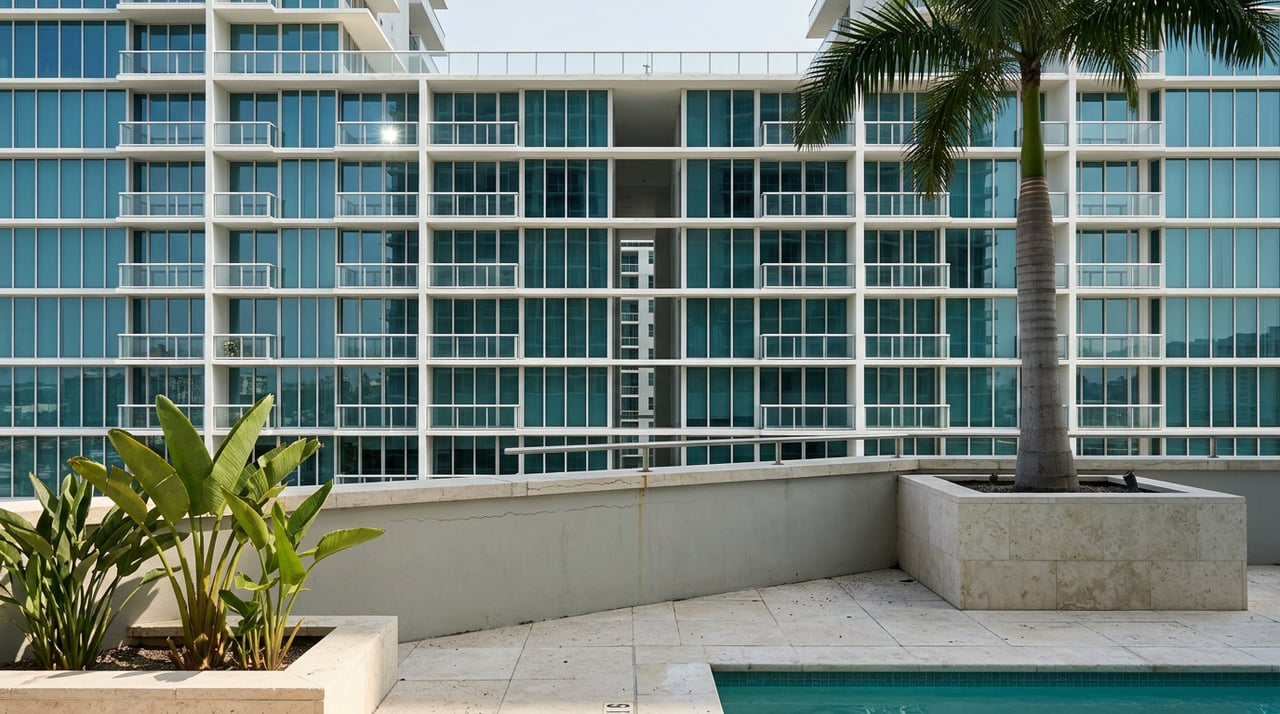
That's Nima Mahdjour, a unit owner at 1060 Brickell, describing a $21 million special assessment his condo board approved in November 2024. Two towers, built in 2008, suddenly needed a repair bill large enough that some owners were staring down individual payments north of $40,000. The board cited Florida law. Owners said they'd been given no real vote. The dispute dragged into a board election, then into litigation that was still unresolved by mid-2025.
If you're shopping for a Brickell condo right now, the 1060 Brickell story isn't a cautionary tale from a neighborhood you're avoiding. It's a preview of the conversation you're about to have in almost any resale building over about 15 years old. The thing that decides whether a Brickell condo is actually a good deal in 2026 isn't the price per square foot on the listing sheet. It's whether that building has already done the reserve math the state now requires, or whether that bill is still coming.
The law behind the bill
Florida's response to the 2021 Champlain Towers South collapse created two separate but overlapping requirements for condo and co-op buildings three or more habitable stories tall.
| Milestone Inspection | Structural Integrity Reserve Study (SIRS) | |
|---|---|---|
| Triggered by | Building age (30 years, or 25 if a local agency requires it near the coast) | Same height threshold, on a 10-year cycle after creation |
| What it produces | An engineer's finding on whether the structure has "substantial structural deterioration" | A funding plan estimating what the association needs to save for roofs, load-bearing walls, waterproofing, and other structural components |
| Who performs it | A licensed engineer or architect | A licensed engineer, architect, or certified reserve specialist |
| 2026 deadline | Mostly already passed for buildings that hit 30 before 2026 | December 31, 2025 for most owner-controlled associations formed before July 2022, with an outer date of December 31, 2026 for buildings pairing the study with a milestone inspection |
Florida's Division of Condominiums, Timeshares and Mobile Homes tracks these deadlines directly, and as of this year associations that waived structural reserves in past budgets can no longer do so. Full funding is required starting January 1, 2026. That's the mechanism turning routine maintenance into headline-sized bills across the county right now, and Brickell's building stock, much of it constructed between the late 1990s and mid 2000s, sits squarely in the age band where this is landing hardest.
1060 Brickell isn't the only address on the list
The pattern shows up on both sides of the neighborhood.
At Isola, a 300-unit tower on Brickell Key completed in 1990, owners have been facing a roughly $19 million assessment tied to pool deck and garage repairs, on top of several smaller ones. One longtime resident told the Biscayne Times she was ready to sell simply because the building felt like it was falling apart around her, between a shuttered party room used for storage and a business center stripped of its computers.
Then in May 2026, five separate condo associations on Brickell Key, Brickell Key One, Brickell Key Two, Isola, Courvoisier Courts, and Carbonell, filed suit against developer Swire Properties over a $32.3 million assessment tied to the Brickell Key Shoreline Resiliency Initiative, a seawall and baywalk project. Swire has said it plans to pay more than its required share of the cost. The lawsuit itself is less important to a buyer than what it confirms: this isn't one poorly managed building having a bad year. It's a structural feature of owning a unit on an island where every association shares the same 1980s-era seawall and the same bill for maintaining it.
Why identical price tags can hide very different exposure
Here's where this actually changes how you should shop. Brickell HOA dues currently range from about $0.80 to $2.50 per square foot per month, a spread of three times or more between buildings with similar square footage and similar amenities. Some of that gap is finish level and staffing. A meaningful part of it is how honestly a building has been funding its reserves for the last decade.
Two 1,000 square foot units listed at the same price, in buildings a block apart, can carry a $700 monthly HOA payment in one and a $2,000 payment in the other, with a six-figure assessment sitting one board vote away in the second building. The listing price tells you nothing about which one you're looking at. The reserve study does.
This is also why new construction has quietly become a different asset class from resale in this specific respect. Buyers moving into towers like Baccarat Residences or Cipriani Residences aren't inheriting decades of underfunded reserves, because those associations are being formed now, under the current funding rules, with no backlog to catch up on. That's not a reason to avoid resale Brickell, which still offers scale and value that new construction doesn't match dollar for dollar. It's a reason to underwrite resale differently than you'd underwrite a brand-new tower.
The market is giving you time to actually check
The good news is that current conditions favor slowing down and asking. Miami-Dade County carried 12.3 months of existing condo supply as of the MIAMI Association of Realtors' June 2026 report, comfortably past the six to nine months the association defines as a balanced market. Brickell's own numbers reflect that same softness, with Zillow reporting a median sale price of $594,167 as of the end of May 2026 and a median 129 days to pending as of June 30, 2026. That's not a market where you need to waive contingencies to win a bidding war. It's a market where you can ask for the documents, wait for them, and walk if they don't show up.
Before you write an offer on a resale unit, request:
- The most recent SIRS report, with funding percentages broken out by component, not just a summary letter
- The milestone inspection report if the building is 25 years or older, including whether it's still in Phase 1 or has moved to a Phase 2 structural review
- A written disclosure of every pending, approved, or anticipated special assessment, with per-unit dollar amounts and the proposed payment schedule
- At least the last 12 months of board meeting minutes, which often surface a discussion about a coming assessment months before it's formally levied
- Confirmation that the association has the owner-facing website or portal now required for buildings with 25 or more units, so you can cross-check what you're told against what's actually posted
If a seller or association can't produce these within a reasonable window, that delay is information in itself.
If you're the one selling into this market
If you already own in a building facing an assessment, you're not without options. Miami-Dade County's Condominium Special Assessment Program is expected to reopen in early 2026, offering loans of up to $50,000 with a 40-year repayment term to owners earning below 140% of the area median income. It won't offset a seven-figure seawall project, but for a mid-size assessment it can be the difference between staying and being forced to sell at a discount because buyers are pricing in the same bill you're trying to pay off.
A few questions worth settling before you sign anything
Does buying pre-construction avoid this problem entirely? For the reserve backlog question, largely yes. A new association starts at zero deferred structural liability. It doesn't remove construction timeline risk or the fact that you're buying into a building with no operating history yet.
What's actually different between a milestone inspection and a SIRS? The milestone inspection is a one-time structural safety check triggered by the building's age. The SIRS is a financial planning document that estimates how much the association needs to be saving, and by when, for eight specific structural components. A building can pass its milestone inspection and still have a SIRS showing its reserves are badly underfunded.
Can I get out of a contract if the SIRS turns up bad news after I've signed? Florida law gives condo buyers a window to review the association's financial disclosures and cancel if something looks wrong, but the clock starts the day you receive the documents, not the day you requested them. Confirm the exact timeline with your closing attorney before you're relying on it.
Brickell still has genuine value in it, in resale towers with clean reserve histories and in new construction where that history hasn't been written yet. The work is figuring out which kind of building you're actually looking at before the price convinces you it doesn't matter.
If you're comparing a specific Brickell building's financial health against another, or trying to read a SIRS report you've just been handed, Green Group Realty can walk through it with you. Schedule a personal market consultation with Javier Portal before you write your next offer.